
 In order to appreciate Черногория’s artistic культура, one cannot refer merely to a few well-known monuments, rather, one should consider all works of искусство of this регион and the circumstances in which they were produced and later discovered, to truly appreciate the tale of this place. At times, it is also important to consider allegorical documentation favored by the древний Greeks when we speak about the искусство of this small регион.
 Черногория, is a small country, but the place has ‘old bones’ and it is one of the oldest regions known to early civilizations. If one thinks of its history, it is very difficult to define Черногория’s geography in different исторический periods since this very little регион has been of interest of many imperialist powers though ages. Between many wars, Черногория has been hit by природный disasters. As in neighboring Greece, earthquakes periodically destroyed many man maid objects of исторический importance but there are still many worth of mentioning.
 For example Locality of Malo Rose which dates from 6th to 10th century represents the beginning of the Christianity. From the церковь of the St. Toma in the деревня of Kuti and the churh in the деревня of Suscepan have been preserved камень decorative plastics, from 9th to 11th century, and altar камень partition – parapet plate.
 Most of Черногория’s land is made up of Karst formations, but it is also rich in white marble, especially near places of the древний Doclea. The second Roman manicipium is found here, which showed dedication and artistic spirit of the people that ones lived here since the grain of Черногория’s marble is not fine and compact and it was very difficult to work with it die to its hardness, far greater that that of Pentelic or Carrera marbles that are somewhat soft and more approachable material.
For столетия, Черногория was considered as a place that lacks material and modern riches, inaccessible for travelers, with a rigid terrain and very raw and untouched wild beauty. Its simplicity dates back in the древний times, and has been maintained for generations and столетия. Testament to this are pure forms of several works (that people of northern villages still use) such as antique Cup with a handle and high cylindrical neck of backed clay, decorated with broad bands and ориентация, displayed at the музей. This reminded me of my grandmother’s credenza full of very old backed clay dishes. However, this особенный work of искусство found in the музей dates back to 2100-1900 B.C.
Most of Черногория’s land is made up of Karst formations, but it is also rich in white marble, especially near places of the древний Doclea. The second Roman manicipium is found here, which showed dedication and artistic spirit of the people that ones lived here since the grain of Черногория’s marble is not fine and compact and it was very difficult to work with it die to its hardness, far greater that that of Pentelic or Carrera marbles that are somewhat soft and more approachable material.
For столетия, Черногория was considered as a place that lacks material and modern riches, inaccessible for travelers, with a rigid terrain and very raw and untouched wild beauty. Its simplicity dates back in the древний times, and has been maintained for generations and столетия. Testament to this are pure forms of several works (that people of northern villages still use) such as antique Cup with a handle and high cylindrical neck of backed clay, decorated with broad bands and ориентация, displayed at the музей. This reminded me of my grandmother’s credenza full of very old backed clay dishes. However, this особенный work of искусство found in the музей dates back to 2100-1900 B.C.
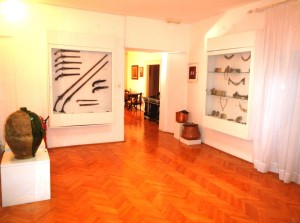
 Additionally two bowls, that have been discovered in the регион, have small particles of metal, which introduces us already the next period – the early stages of the antiquity times. Objects such as small metal sharp harpoons and broken spears are seen on the dusty shelves of this tiny музей, and they have small faded Cyrillic writings below them. The alphabet itself is древний, and even though Latin alphabet is commonly used in this регион, many schools teach Cyrillic as a second alphabet to encourage new generations to stay true to its древний roots.
 In Черногория, the Neolithic Age, with all of its three phases such as lower, middle and upper phase, are represented by ceramic artifacts used for every day life. However, there are many more traces of Eneolithic cultures than of Neolithic ones, and this makes the evaluation of style and artistic trends more difficult.
 Some scholars believe that the decorations on Eneolithic bowls constitute of some sort of prehistoric sign system serving to identify особенный races, each having their own group of symbols. One the other hand, some believe that these decorations form a part of figurative and and aesthetic language. One of the most important facts is that despite the small size of our country, one can forget to mention an enormous variety of folkloric traditions.
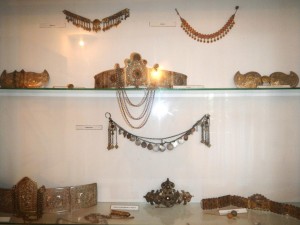
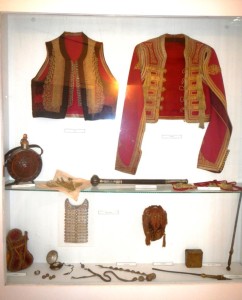 The ethnological study of the dance, needlework, decorative искусство, costumes, jewelry, engravings, colors of the designs on terracotta bowls and, the местный folk искусство of nearly every town, explains the large wave of migration from the север coast of the Black Sea (the Indo-European migration) which had tremendeous influence on this area. Although scientific proofs of many migrations are evident, sceentists are unable to identify a single Eneolithic “race” in Черногория. On the basis of various facts and evidence found in the регион, that there were several races. This is why historians still call Черногория’s Eneolithic people by the generic name of “Indo-Europeans”. With that in mid, please refer to the following works of искусство which is a testimony of the first dwelling traces of human communities:
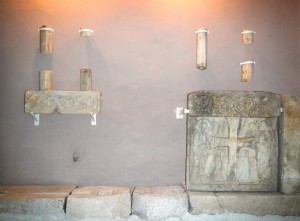 One of those dwellings were discovered in the cave Vranjaj, under the peak Radostak near Херцег-Нови. They date from the Neolithic period (5000- 4000 BC). More intensive populating became in Eneolith (2000 – 1700BC) and also during Bronze Age. The Bronze Age goblet with ornament from the cave Vranjaj. During the Bronze and Iron Age, burring under tumuluses was intensive – Glogovik, Vranjaj, and Djevojacke Grede.
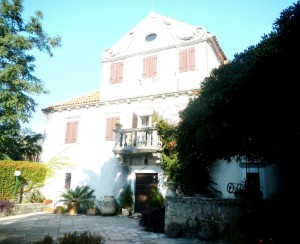
In 1953, a home of Mirko Komnenic, is turned in the National Музей of Херцег-Нови. It is a красивый structure designed in the late-baroque style, and it was built in the late 18th century. Pseudo-baroque expansions and attached additions had altered the original appearance of the музей, making it look grand.
One of those dwellings were discovered in the cave Vranjaj, under the peak Radostak near Херцег-Нови. They date from the Neolithic period (5000- 4000 BC). More intensive populating became in Eneolith (2000 – 1700BC) and also during Bronze Age. The Bronze Age goblet with ornament from the cave Vranjaj. During the Bronze and Iron Age, burring under tumuluses was intensive – Glogovik, Vranjaj, and Djevojacke Grede.
In 1953, a home of Mirko Komnenic, is turned in the National Музей of Херцег-Нови. It is a красивый structure designed in the late-baroque style, and it was built in the late 18th century. Pseudo-baroque expansions and attached additions had altered the original appearance of the музей, making it look grand.
One of those dwellings were discovered in the cave Vranjaj, under the peak Radostak near Херцег-Нови. They date from the Neolithic period (5000- 4000 BC). More intensive populating became in Eneolith (2000 – 1700BC) and also during Bronze Age. The Bronze Age goblet with ornament from the cave Vranjaj. During the Bronze and Iron Age, burring under tumuluses was intensive – Glogovik, Vranjaj, and Djevojacke Grede.
In 1953, a home of Mirko Komnenic, is turned in the National Музей of Херцег-Нови. It is a красивый structure designed in the late-baroque style, and it was built in the late 18th century. Pseudo-baroque expansions and attached additions had altered the original appearance of the музей, making it look grand.
One of those dwellings were discovered in the cave Vranjaj, under the peak Radostak near Херцег-Нови. They date from the Neolithic period (5000- 4000 BC). More intensive populating became in Eneolith (2000 – 1700BC) and also during Bronze Age. The Bronze Age goblet with ornament from the cave Vranjaj. During the Bronze and Iron Age, burring under tumuluses was intensive – Glogovik, Vranjaj, and Djevojacke Grede.
In 1953, a home of Mirko Komnenic, is turned in the National Музей of Херцег-Нови. It is a красивый structure designed in the late-baroque style, and it was built in the late 18th century. Pseudo-baroque expansions and attached additions had altered the original appearance of the музей, making it look grand.
One of those dwellings were discovered in the cave Vranjaj, under the peak Radostak near Херцег-Нови. They date from the Neolithic period (5000- 4000 BC). More intensive populating became in Eneolith (2000 – 1700BC) and also during Bronze Age. The Bronze Age goblet with ornament from the cave Vranjaj. During the Bronze and Iron Age, burring under tumuluses was intensive – Glogovik, Vranjaj, and Djevojacke Grede.
In 1953, a home of Mirko Komnenic, is turned in the National Музей of Херцег-Нови. It is a красивый structure designed in the late-baroque style, and it was built in the late 18th century. Pseudo-baroque expansions and attached additions had altered the original appearance of the музей, making it look grand.
One of those dwellings were discovered in the cave Vranjaj, under the peak Radostak near Херцег-Нови. They date from the Neolithic period (5000- 4000 BC). More intensive populating became in Eneolith (2000 – 1700BC) and also during Bronze Age. The Bronze Age goblet with ornament from the cave Vranjaj. During the Bronze and Iron Age, burring under tumuluses was intensive – Glogovik, Vranjaj, and Djevojacke Grede.
In 1953, a home of Mirko Komnenic, is turned in the National Музей of Херцег-Нови. It is a красивый structure designed in the late-baroque style, and it was built in the late 18th century. Pseudo-baroque expansions and attached additions had altered the original appearance of the музей, making it look grand.
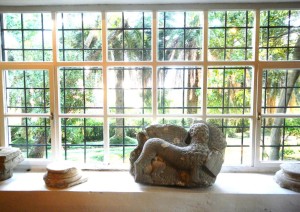 Etched / engraved names with bayonets of the Russian soldiers, dating 1807 during the war with Napoleon, are decorating the authentic door on the ground floor. Later, this building gained the official title of the Regional Музей of Херцег-Нови. Partial restorations of the музей occurred in 1979, 1994, 1996. and 2001.
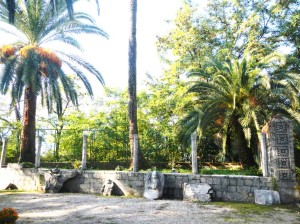
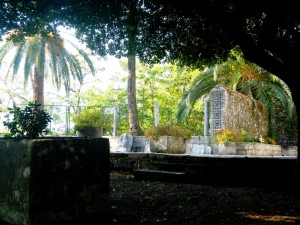
In front of the Regional Музей there is an amazing Средиземноморский and subtropical botanic сад, with more than a hundred selected plants, which are decorating парк space of 1000 square meters. Many very exotic and extravagantly уникальный plants found its space here in this красивый сад. Many kinds of palm trees, Agave plants, cactuses, aloes and many other plants grow in very unusual shapes and colors. During the blooming season, the blooms refine the ambiance. Here, we can find different sorts of climbing plants like Pitosporums, also the прибрежный Pine trees, Mimosas flower trees, Camellias, Magnolias and the fragrant and medicinal Средиземноморский herbs.
Etched / engraved names with bayonets of the Russian soldiers, dating 1807 during the war with Napoleon, are decorating the authentic door on the ground floor. Later, this building gained the official title of the Regional Музей of Херцег-Нови. Partial restorations of the музей occurred in 1979, 1994, 1996. and 2001.
In front of the Regional Музей there is an amazing Средиземноморский and subtropical botanic сад, with more than a hundred selected plants, which are decorating парк space of 1000 square meters. Many very exotic and extravagantly уникальный plants found its space here in this красивый сад. Many kinds of palm trees, Agave plants, cactuses, aloes and many other plants grow in very unusual shapes and colors. During the blooming season, the blooms refine the ambiance. Here, we can find different sorts of climbing plants like Pitosporums, also the прибрежный Pine trees, Mimosas flower trees, Camellias, Magnolias and the fragrant and medicinal Средиземноморский herbs.
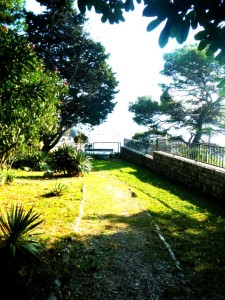 Mirko Komnenic donated his home as a foundation to the town of Херцег-Нови. In his Living Will and Testament, he wanted this building to be used in a form of town’s музей.
Mirko Komnenovic was active during the Balkan wars, he worked with propaganda and intelligence services against Austro-Hungary. Also, he was a prisoner of the Mamula Tower during the First Мир War. He was elected for the ambassador of Бока-Которская in the National Parliament of the Monarchy of the Serbs, Croats and Slovenians in 1923. and 1925. Also , he held the president position of the community of Херцег-Нови in 1930. He became the Minister of Social Politics and the National Health in 1935.
He was honored with many medals. These are one of many: White Eagle with swords, St. Sava’s of the first and the third degree; Russian: St.Vladimir’s 4th class, St. Stanislav`s 5th class, St. Ana’s 2nd degree; with French Legion of Honor, and Czechoslovakian officer Revolutionaries` cross.
Another interesting fact that demonstrates how great this man really was is his wish that his entire earnings and proceeds should be donated to the местный orphanage home to help the orphans of Херцег-Нови, regardless of their religion or ethnic background.
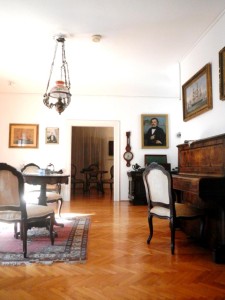
This Музей houses a исторический, археологический, ethnological and icon collection of искусство.
Mirko Komnenic donated his home as a foundation to the town of Херцег-Нови. In his Living Will and Testament, he wanted this building to be used in a form of town’s музей.
Mirko Komnenovic was active during the Balkan wars, he worked with propaganda and intelligence services against Austro-Hungary. Also, he was a prisoner of the Mamula Tower during the First Мир War. He was elected for the ambassador of Бока-Которская in the National Parliament of the Monarchy of the Serbs, Croats and Slovenians in 1923. and 1925. Also , he held the president position of the community of Херцег-Нови in 1930. He became the Minister of Social Politics and the National Health in 1935.
He was honored with many medals. These are one of many: White Eagle with swords, St. Sava’s of the first and the third degree; Russian: St.Vladimir’s 4th class, St. Stanislav`s 5th class, St. Ana’s 2nd degree; with French Legion of Honor, and Czechoslovakian officer Revolutionaries` cross.
Another interesting fact that demonstrates how great this man really was is his wish that his entire earnings and proceeds should be donated to the местный orphanage home to help the orphans of Херцег-Нови, regardless of their religion or ethnic background.
This Музей houses a исторический, археологический, ethnological and icon collection of искусство.
.jpg&w=2048&q=75)