It is the question that haunts every traveler planning an Adriatic vacation, whispered in travel forums, debated in hostel common rooms, and agonized over at booking screens: Montenegro or Croatia? These two neighboring countries share 650 kilometers of some of the most spectacular coastline in the Mediterranean, a history shaped by the same empires (Roman, Venetian, Ottoman, Austro-Hungarian, Yugoslav), and a culinary tradition rooted in fresh seafood, grilled meats, and wines that are finally getting the international recognition they deserve. From a distance, they can appear almost interchangeable — Adriatic Sea, medieval old towns, limestone mountains, terracotta rooftops.
But spend even a few days in each country and the differences become vivid. Croatia is the polished, established Mediterranean destination, with world-class infrastructure, direct flights from seemingly everywhere, and a tourist industry refined over decades. Montenegro is the raw, emerging alternative — wilder, cheaper, less predictable, and in many ways more thrilling for exactly those reasons. Croatia is the Adriatic you expected; Montenegro is the Adriatic that surprises you.
This guide breaks down the comparison across every category that matters to travelers, from budget and beaches to nightlife and nature. The goal is not to declare a winner — both countries are magnificent — but to help you decide which one (or both) best fits your particular trip.
Cost: Montenegro Wins Decisively
This is the category where Montenegro's advantage is most clear-cut and most impactful for travelers on any budget. Across virtually every spending category, Montenegro costs 30 to 40 percent less than Croatia, and in some categories the gap is even wider.
Dining
A full meal at a local restaurant in Montenegro — appetizer, main course, salad, and a drink — typically costs EUR 12 to 20. In Croatia, the same meal runs EUR 20 to 35. The gap is particularly pronounced for seafood: a grilled fish platter for two with sides and wine costs EUR 30 to 45 in Montenegro versus EUR 50 to 80 in Croatia. Even simple items reflect the difference: a large draft beer in a Montenegrin bar is EUR 2 to 3, while in Croatian coastal towns it is EUR 4 to 6. A coffee in a Montenegrin cafe costs EUR 1 to 1.50; in Split or Dubrovnik, expect EUR 2.50 to 4.
These are not negligible differences when accumulated over a one- or two-week trip. A couple spending two weeks eating out regularly could easily save EUR 500 to 800 by choosing Montenegro over Croatia.
Accommodation
Mid-range accommodation in Montenegro — a comfortable double room in a well-reviewed guesthouse or small hotel, or a private apartment with a kitchen — costs EUR 50 to 100 per night in summer season. The equivalent in Croatia, particularly in popular destinations like Dubrovnik, Split, Hvar, or Rovinj, runs EUR 80 to 180 per night. Budget accommodation (hostels, basic apartments) starts at EUR 15 to 30 in Montenegro versus EUR 25 to 50 in Croatia. Luxury accommodation shows a smaller gap, with high-end hotels in both countries ranging from EUR 200 to 500 per night.
Daily Budget Comparison
| Category | Montenegro (EUR) | Croatia (EUR) |
|---|---|---|
| Budget accommodation (per night) | 25-40 | 35-60 |
| Mid-range accommodation (per night) | 50-100 | 80-180 |
| Lunch (main course + drink) | 8-15 | 15-25 |
| Dinner (full meal for one) | 12-20 | 20-35 |
| Beer (large draft) | 2-3 | 4-6 |
| Coffee | 1-1.50 | 2.50-4 |
| Museum entry (typical) | 2-5 | 8-15 |
| Bus (intercity, 1-2 hours) | 4-8 | 8-15 |
| Estimated daily budget (budget traveler) | 60-100 | 100-160 |
| Estimated daily budget (mid-range) | 100-160 | 160-260 |
The math is simple: for the same money, you can stay longer in Montenegro, eat better, and do more — or you can enjoy the same trip length while spending significantly less.
Beaches: Different Strengths (Tie)
Both countries offer exceptional swimming and beach experiences, but with distinctly different characters.
Croatia's Beach Advantage
Croatia's greatest geographic asset is its 1,200-plus islands, ranging from large inhabited islands with towns, restaurants, and hotels (Hvar, Brač, Korčula, Vis) to tiny uninhabited islets accessible only by private boat. This island geography creates an almost infinite variety of beaches and coves, many accessible only by water, giving Croatia an exploratory dimension that Montenegro cannot match.
Croatian beaches are predominantly pebble and rock rather than sand, with the famous exception of Zlatni Rat on Brač. The island-hopping culture — catching ferries between Hvar, Korčula, and Vis over the course of a week — is one of the great Mediterranean travel experiences.
Croatia also has the advantage of the Dalmatian islands' exposure to the open Adriatic, which generally means clearer, cooler water than enclosed bays.
Montenegro's Beach Advantage
Montenegro compensates with dramatic setting and a variety of beach types that Croatia's coastline does not offer. The Bay of Kotor provides sheltered, warm-water swimming in a fjord-like setting unmatched anywhere on the Adriatic. The Budva Riviera offers a string of sandy and pebble beaches backed by mountains. And Ulcinj's Velika Plaža (Long Beach) stretches for 13 kilometers of unbroken sand — the longest sandy beach on the Adriatic and one of the longest in Europe.
The water clarity around Montenegro's outer coast (Luštica Peninsula, Žanjic Beach, Rose) is equal to anything in Croatia. And swimming off the concrete platforms that dot the Bay of Kotor coastline, dropping directly into 10-meter-deep water beside medieval stone buildings, is an experience unique to Boka.
The Verdict
Croatia wins on variety and the island-hopping experience. Montenegro wins on dramatic coastal scenery and sandy beach options. For pure swimming pleasure, both are excellent. Call it a tie, with the edge going to whichever style you prefer.
Old Towns: Similar Beauty, Different Experiences (Tie)
Both countries contain some of the best-preserved medieval old towns in the Mediterranean, and comparisons are inevitable.
Kotor vs Dubrovnik
This is the comparison everyone makes, and it is the most revealing of the countries' different characters.
Dubrovnik is larger, grander, and more famous. Its complete circuit of city walls (walk-able for EUR 35), the Stradun main street, and the sheer scale of the fortifications make it one of the world's great medieval cities. It is also a UNESCO World Heritage Site and a globally recognized brand, boosted further by its role as a filming location for Game of Thrones.
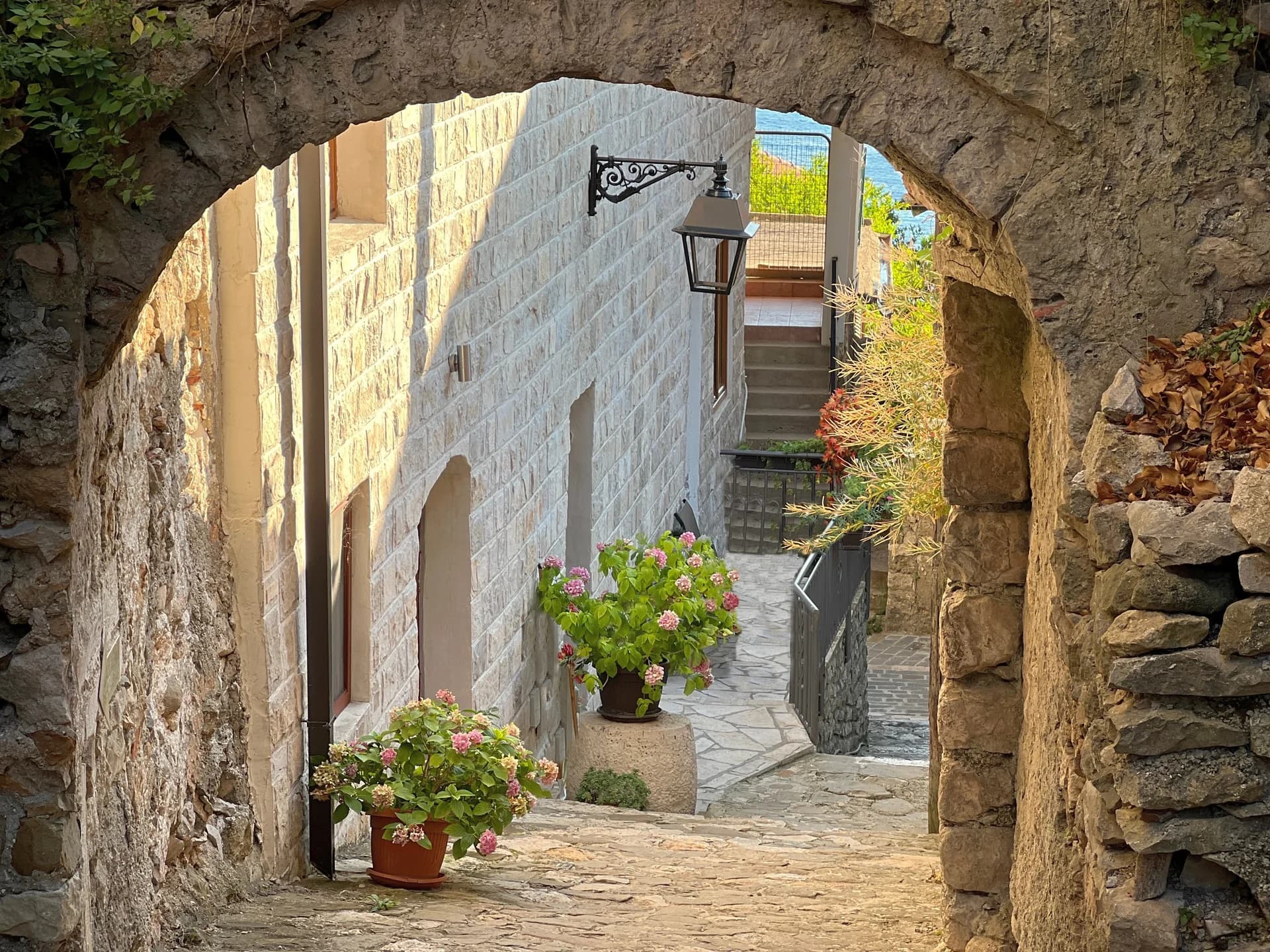
Kotor is smaller, more intimate, and significantly less overwhelmed by tourism. Also a UNESCO World Heritage Site, its walled old town is a labyrinth of narrow alleys, hidden squares, and Venetian architecture that feels genuinely discovered rather than performed. The fortress climb above the town adds a vertical dimension that Dubrovnik lacks.
The critical difference is crowds. Dubrovnik received approximately 1.5 million cruise ship passengers in 2024, plus millions of other tourists. On peak days, the old town can feel more like a theme park than a living city. Kotor receives far fewer visitors, and while cruise ships do dock here too (up to 4 per day in peak season), the scale is smaller and the impact less overwhelming. On a quiet morning in Kotor's old town, you can still feel like an explorer rather than a consumer.
The verdict: Dubrovnik is more impressive on first sight; Kotor is more satisfying to linger in. Dubrovnik is better for architecture enthusiasts; Kotor is better for atmosphere seekers.
Budva vs Split
Split is Croatia's second city, with the remarkable Diocletian's Palace at its heart — a 1,700-year-old Roman emperor's retirement home converted into a living, breathing city center. It has a genuine year-round urban culture, excellent museums, a vibrant dining scene, and ferry connections to the islands.
Budva is smaller and more party-oriented, with a compact old town that is charming but historically less significant. Its strength is the combination of old-town atmosphere with beach access (Budva's old town sits directly on the water with beaches on either side).
The verdict: Split wins for culture and history. Budva wins for beach-town vibes.
Herceg Novi vs Trogir
Trogir is a tiny island old town connected to the mainland by a bridge, with a UNESCO-listed center that feels like a miniature Dubrovnik. Herceg Novi is a hillside fortress town at the bay entrance, with a more lived-in, less polished character. Both are charming alternatives to the big-name old towns.
Nature and Landscapes: Montenegro Has an Edge
Both countries are blessed with extraordinary natural beauty, but Montenegro's combination of mountain and coastal landscapes, compressed into a tiny area, gives it a slight advantage for nature lovers.
Montenegro's Nature
Montenegro's statistics are remarkable for a country of its size. Over 60 percent of the territory is mountainous. The Tara River Canyon, at 1,300 meters deep, is the deepest canyon in Europe and second in the world only to the Grand Canyon. Durmitor National Park contains 48 peaks over 2,000 meters, 18 glacial lakes, and one of the last primeval forests in Europe. Bobotov Kuk reaches 2,523 meters. Zla Kolata, the highest peak, reaches 2,534 meters. Five national parks protect an extraordinary range of ecosystems.
The vertical drama is unmatched on the Adriatic: within a 90-minute drive, you can go from sea level to 1,500 meters, from Mediterranean olive groves to alpine meadows. The Bay of Kotor alone combines deep water, sheer mountain walls, medieval towns, and island churches in a landscape that feels engineered for maximum visual impact.
Croatia's Nature
Croatia has eight national parks, including the world-famous Plitvice Lakes — a system of 16 terraced lakes connected by waterfalls that is, justifiably, one of the most visited natural attractions in Europe (entry EUR 30 to 40 in summer). Krka National Park offers similar (smaller but also beautiful) waterfall systems. The Dinaric Alps rise dramatically along the coast, and the islands provide seascapes that are endlessly varied.
However, Croatia's highest mountain (Dinara, 1,831m) is significantly lower than Montenegro's peaks, and the country lacks the extreme canyon depth and glacial landscape drama of Durmitor and Prokletije. Croatia's nature is beautiful but generally gentler than Montenegro's.
The Verdict
If dramatic, raw, extreme landscapes thrill you — deep canyons, high peaks, glacial lakes, primeval forests — Montenegro wins. If waterfall systems, island seascapes, and gentler landscapes appeal, Croatia is equally compelling. For overall natural diversity per square kilometer, Montenegro has the edge.
Food and Drink: Similar Roots, Different Expressions (Tie)
Both countries share a culinary foundation of Mediterranean and Balkan influences: fresh seafood, grilled meats, seasonal vegetables, olive oil, and wines. The differences are in refinement and regional specialties.
Montenegro's Culinary Character
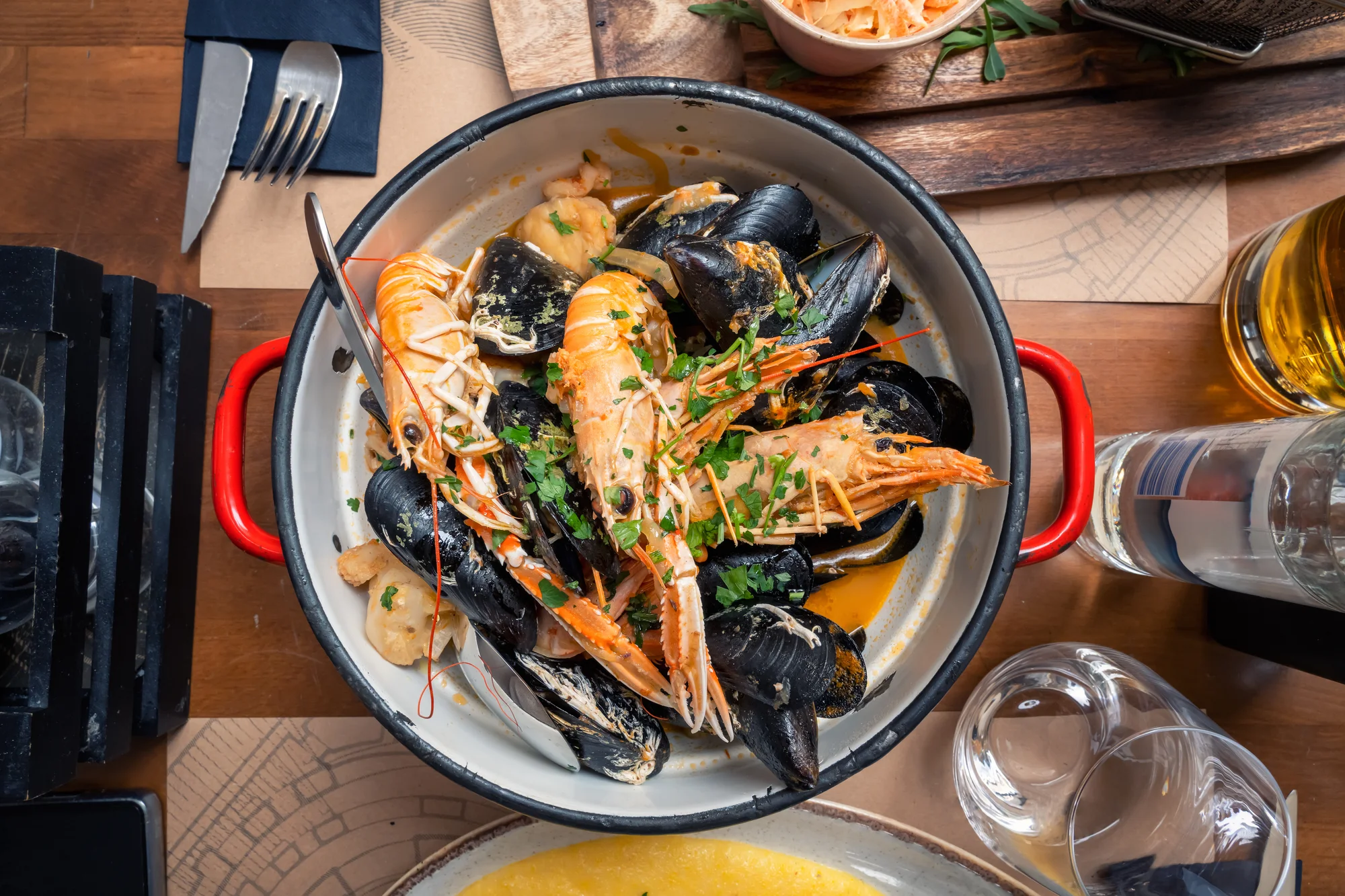
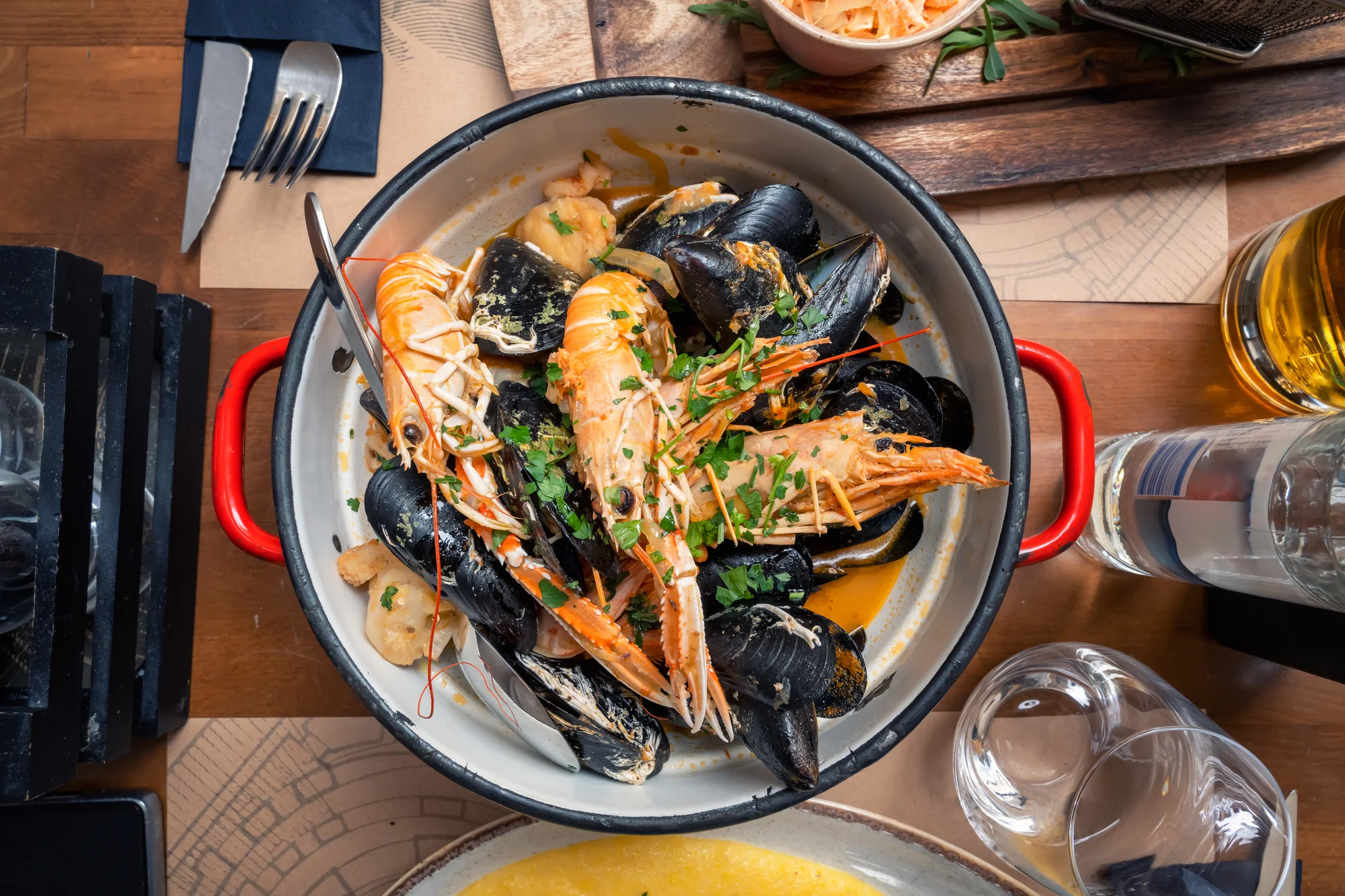
Montenegrin cuisine is heartier and more rustic than Croatia's, reflecting the country's mountain heritage. The coast offers excellent grilled fish and seafood risottos at very accessible prices. But it is the mountain dishes that distinguish Montenegrin food:
- Kačamak: A rich polenta-like dish made with cornmeal, mashed potatoes, and young cheese, drizzled with cream (kajmak). Simple, filling, and addictive.
- Lamb in milk (jagnjetina ispod sača): Slow-roasted lamb under a metal dome covered in hot coals. Tender, fragrant, and ceremonial.
- Njeguški steak: Veal or pork stuffed with Njeguški cheese and smoked ham, named after the village on Mount Lovćen.
- Njeguški cheese and pršut: The smoked dried ham and hard cheese from Njeguši village are Montenegro's most famous food products, comparable to Italian prosciutto and pecorino.
- Vranac wine: Montenegro's signature red grape, producing full-bodied, dark wines that pair beautifully with grilled meats. The Plantaže winery near Podgorica is the largest vineyard in Europe under single management.
The dining experience in Montenegro tends to be informal, generous, and oriented toward sharing. Portions are large, prices are low, and the atmosphere is welcoming rather than refined.
Croatia's Culinary Character
Croatia's food scene is more diverse and, in some regions, more refined. The Istrian peninsula in the northwest has developed a sophisticated cuisine built around truffles (both black and white), olive oil, and pasta — drawing comparisons to Tuscany. Dalmatian cuisine is seafood-forward, with dishes like:
- Pašticada: A complex slow-cooked beef stew from Dalmatia, often served with gnocchi.
- Peka: Meat or octopus slow-cooked under a bell lid (similar to Montenegro's ispod sača tradition).
- Black risotto (crni rižot): A dramatic squid-ink risotto that is a Dalmatian signature.
- Istrian truffles: Both black and white truffles are found in Istria, and truffle-based dishes (pasta, omelets, cheese) are a highlight.
- Croatian wines: Plavac Mali (a relative of Zinfandel), Dingač, Postup, and Malvazija are increasingly recognized internationally.
Croatia's restaurant scene includes a growing number of fine-dining establishments, including several with Michelin recognition. Montenegro's dining scene is less stratified — excellent food exists, but the emphasis is on tradition and value rather than culinary innovation.
The Verdict
For adventurous eating and value, Montenegro wins. For refined dining, wine tourism, and culinary sophistication, Croatia has the edge. For everyday pleasure of eating fresh, well-prepared food in beautiful settings, both deliver magnificently.
Getting There: Croatia Wins on Connections
Croatia
Croatia's tourism infrastructure is mature, and its transport connections reflect this. Zagreb, Split, Dubrovnik, Zadar, Pula, and Rijeka airports all receive direct flights from across Europe, with major carriers and budget airlines competing for routes. In peak summer, Dubrovnik and Split have direct connections to over 100 cities. Ferries connect the mainland to dozens of islands. The highway system is excellent (the A1 motorway from Zagreb to Split is a modern toll road). International bus and rail connections reach all neighboring countries.
Montenegro
Montenegro's air connectivity is more limited. Podgorica Airport (TGD) and Tivat Airport (TIV) are the two gateways. Tivat has seasonal connections to many European cities (expanding each year), while Podgorica has year-round flights to a smaller number of destinations. No major European hub has daily year-round service at the scale Croatia enjoys.
However, the proximity to Dubrovnik Airport (2 hours from Kotor by car) effectively gives Montenegro access to Croatia's excellent flight network. Many visitors fly into Dubrovnik and drive south into Montenegro, combining both countries in a single trip.
Within Montenegro, the road network is good on main routes but challenging in mountainous areas (narrow, winding, sometimes poorly maintained). The country has no functioning passenger rail service of practical use to tourists. Intercity buses are the primary public transport.
The Verdict
Croatia wins clearly on transport infrastructure and flight connections. Montenegro is catching up but remains dependent partly on Dubrovnik as an overflow gateway. For travelers from major European cities, Croatia is simply easier to reach.
Infrastructure and Tourist Development: Croatia Leads
Croatia
Decades of tourism development have given Croatia polished infrastructure: well-maintained roads, organized signage, professional tour operators, a wide range of accommodation from backpacker hostels to luxury resorts, and efficient ferry systems connecting the islands. Tourist information offices are well-staffed and English-speaking. Restaurant standards are consistent. Card payment is widely accepted.
Montenegro
Montenegro's infrastructure is developing rapidly but remains a step behind. Roads are generally good on main routes but can be challenging on secondary mountain roads (single-lane, steep drops, no barriers). Tourist information is less organized. Accommodation quality can be inconsistent — wonderful family-run guesthouses sit alongside neglected concrete-era hotels. Cash remains more important than in Croatia (though card acceptance is improving). Construction is ongoing in many coastal areas, which can mean noise and visual disruption.
The Verdict
Croatia offers a more polished, predictable tourist experience. Montenegro offers a rawer, more adventurous one. Neither is objectively "better" — it depends on what you value. If you want everything to work smoothly and predictably, Croatia delivers. If you enjoy the frisson of discovery and do not mind occasional rough edges, Montenegro rewards you with authenticity.
Crowds and Overtourism: Montenegro Wins
This may be the most significant practical difference between the two countries for travelers in 2026.
Croatia receives approximately 20 million tourist arrivals per year. Montenegro receives approximately 2.5 million. The raw numbers tell the story, but the impact is even more pronounced because Croatia's tourism is heavily concentrated in a few hotspots: Dubrovnik, Split, Hvar, and the Plitvice Lakes. These locations can feel saturated in July and August, with cruise ships disgorging thousands of day-trippers, restaurant queues extending onto streets, and accommodation prices reaching levels comparable to Paris or Rome.
Montenegro's tourism is concentrated in Budva and Kotor, which can indeed feel crowded in peak summer — but the scale is fundamentally different. Even on the busiest day in Kotor, the crowds are a fraction of what Dubrovnik experiences. Step slightly off the beaten path in Montenegro — to Perast, Risan, the Luštica Peninsula, the Tara Canyon, or any mountain town — and you may have the place virtually to yourself even in August.
For travelers who prioritize authentic, uncrowded experiences, Montenegro's lower tourist volume is a decisive advantage. You can still find the "undiscovered Mediterranean" feeling here that Croatia largely lost a decade ago.
Safety: Both Excellent (Tie)
Both Montenegro and Croatia are very safe countries for tourists. Violent crime against visitors is extremely rare in either country. Petty crime (pickpocketing, car break-ins) exists in tourist areas during peak season but is not prevalent in either nation.
The main safety difference is in driving. Montenegro's mountain roads are more challenging: narrower, steeper, with more hairpin turns and fewer guardrails. Local driving habits can be assertive. Croatia's main roads and highways are better maintained and wider. Both countries require caution on secondary roads, but Montenegro demands more driver attention overall.
Both countries are safe for solo female travelers, LGBTQ+ travelers (though both retain some social conservatism, particularly outside major cities and tourist areas), and families.
Nightlife: Different Flavors (Tie)
Montenegro
Budva is Montenegro's nightlife capital, with the Top Hill club (one of the largest open-air nightclubs in Southeastern Europe, perched on a hilltop above the town with sea views) as the headline attraction. The club hosts international DJs and can accommodate thousands. Kotor's old town has a lively bar scene concentrated around the main squares. Podgorica has a year-round nightlife scene centered on the Delta area and the Ribnica riverside district.
Croatia
Croatia's nightlife is more distributed and diverse. Hvar and Pag Island (home to the Zrće Beach club scene) are established party destinations. Split's Bačvice Beach area and Diocletian's Palace cellar bars are vibrant. Dubrovnik has upscale cocktail bars and clubs. Zagreb offers a genuine big-city nightlife scene.
The Verdict
For a single spectacular party night, Top Hill in Budva competes with anything in Croatia. For sustained nightlife over a longer trip, Croatia's variety of island parties, beach clubs, and urban bars offers more range. Both countries deliver; the vibe is different — Montenegro is rawer and more concentrated, Croatia is more varied and polished.
Best For: A Decision Matrix
| Travel Style | Winner | Why |
|---|---|---|
| Budget travelers | Montenegro | 30-40% cheaper across the board |
| Adventure seekers | Montenegro | Deeper canyons, higher peaks, wilder terrain, canyoning |
| Beach vacations | Tie (Croatia for islands, Montenegro for dramatic setting and sand) | Different strengths |
| Cultural immersion | Tie | Both have rich but different cultural offerings |
| Luxury travel | Croatia (slight edge) | More established luxury infrastructure; Porto Montenegro competing |
| Family vacations | Croatia (slight edge) | Better organized for families, more activities, island ferries |
| Party/nightlife | Tie | Different scenes, both excellent |
| Digital nomads | Montenegro | Cheaper, DN visa available, growing community |
| Photography | Montenegro (slight edge) | More dramatic landscapes, fewer crowds in shots |
| Food and wine | Croatia (slight edge) | More diverse and refined, Istrian truffles, better wine recognition |
| First-time Adriatic visitor | Croatia | Easier logistics, more information available, fewer surprises |
| Returning Adriatic visitor | Montenegro | Fresh, less discovered, different perspective |
Why Not Both? The Combined Itinerary
Here is the most important thing to understand: Montenegro and Croatia are not really competing — they are complementary. Dubrovnik and Kotor are separated by just 2 hours of driving, crossing a single straightforward border. A trip combining both countries is not only possible but arguably the ideal way to experience the Adriatic.
The Border Crossing
The main border crossing between Croatia and Montenegro is at Debeli Brijeg / Sitnica, on the coastal highway (E65) south of Dubrovnik. In shoulder season, crossing takes 10 to 20 minutes. In peak summer (July-August), especially on weekend changeover days (Saturday), queues can reach 30 to 60 minutes. There is a second crossing at Karasovići / Konfin that is sometimes less busy.
EU/EEA/Swiss citizens cross with just an ID card. Most other nationalities need a passport. No visa is required for either country for citizens of most Western nations (up to 90 days in each).
Suggested Combined Itineraries
10 Days: 5 + 5
Days 1-5: Croatia (Dubrovnik) - Day 1: Dubrovnik old town and city walls - Day 2: Island of Lokrum, evening in the old town - Day 3: Day trip to Elafiti Islands by ferry - Day 4: Day trip to Mostar, Bosnia (2.5 hours each way) or Ston and Pelješac wine peninsula - Day 5: Dubrovnik museums, beaches, farewell dinner
Days 6-10: Montenegro (Bay of Kotor and beyond) - Day 6: Drive Dubrovnik to Herceg Novi (1 hour), explore Herceg Novi - Day 7: Perast and Our Lady of the Rocks, Kotor old town - Day 8: Kotor fortress at sunrise, Lovćen National Park and Njegos Mausoleum - Day 9: Day trip to Budva and Sveti Stefan, or Blue Cave boat trip from Herceg Novi - Day 10: Morning swim at Žanjic Beach, drive to Dubrovnik or Tivat airport for departure
14 Days: 7 + 7
Week 1: Croatia - Dubrovnik (3 nights), ferry to Korčula (2 nights), ferry to Hvar (2 nights)
Week 2: Montenegro - Bay of Kotor: Kotor (3 nights, including Perast, fortress, Lovćen) - Budva Riviera (2 nights, including Sveti Stefan, beaches) - Durmitor National Park (2 nights, including Black Lake, Bobotov Kuk or Tara Canyon)
Open-Jaw Flights
The ideal logistics for a combined trip: fly into Dubrovnik Airport and out of Tivat Airport (or reverse). This eliminates backtracking and allows a natural south-to-north or north-to-south flow along the coast. Many European airlines offer open-jaw bookings at minimal or no additional cost compared to round-trip fares.
The Final Word
Choosing between Montenegro and Croatia is like choosing between two extraordinary wines from neighboring vineyards: both are excellent, both share roots, but each has its own character that appeals to different palates.
Choose Croatia if: You want the more established, predictable, and polished Adriatic experience. If you dream of island-hopping by ferry, walking Dubrovnik's walls, swimming at Plitvice waterfalls, and dining in Michelin-listed restaurants. If you prefer strong transport connections, abundant information, and an infrastructure designed for tourism.
Choose Montenegro if: You want the wilder, cheaper, less-discovered Adriatic. If deep canyons thrill you more than island ferries. If you want to eat a EUR 12 seafood dinner that would cost EUR 25 across the border. If you find more magic in empty fortress ruins than in crowded city walls. If you want to feel, in 2026, something like what Croatia felt in 2006 — a Mediterranean secret about to be discovered.
Choose both if: You have 10 or more days and want the full Adriatic experience. The 2-hour drive from Dubrovnik to Kotor is one of the most beautiful coastal drives in Europe, and combining both countries in a single trip gives you the breadth of experience that neither alone can provide.
The Adriatic is generous. There is more than enough beauty here for two countries, two trips, or one magnificent journey through both.
Where to Stay
In Montenegro
Kotor: The obvious base for the Bay of Kotor. Stay inside the old town walls for atmosphere (boutique hotels EUR 100-250) or in Dobrota along the bay for better value and waterfront access (apartments EUR 50-100). Best for first-time visitors to Montenegro.
Herceg Novi: Quieter and cheaper than Kotor, with a 7-kilometer promenade and proximity to the Blue Cave and Luštica Peninsula beaches. Hotels EUR 60-150, apartments EUR 40-80. Best for longer stays and those who prefer a local atmosphere over a tourist one.
Budva: Beach-centric base with the most active nightlife. Old-town boutique hotels EUR 80-200, apartments EUR 50-120. Best for beach lovers and younger travelers.
Žabljak: The base for Durmitor National Park hiking. Guesthouses and small hotels EUR 30-80. Best for hikers and nature lovers.
In Croatia
Dubrovnik: The crown jewel. Old town apartments EUR 100-250 (peak season much higher), Lapad area hotels EUR 80-180. Best for the iconic Adriatic experience.
Split: Diocletian's Palace is the heart. Hotels EUR 80-200, apartments EUR 60-150. Best for history, culture, and island-ferry access.
Hvar: The island of lavender, wine, and nightlife. Hotels EUR 100-300, apartments EUR 70-150. Best for island lifestyle, parties, and sailing.
Frequently Asked Questions
Can I visit both Montenegro and Croatia in one trip?
Absolutely, and we strongly recommend it. Dubrovnik to Kotor is just 2 hours by car. Fly into one country's airport and out of the other (open-jaw ticket). Ten days allows 5 days in each; 14 days gives you the luxury of deeper exploration. The border crossing is straightforward, with the main checkpoint at Debeli Brijeg taking 10 to 30 minutes in most conditions (longer in peak summer weekends).
Which country is safer?
Both are very safe for tourists. Crime rates against visitors are low in both. The most notable difference is driving: Montenegro's mountain roads are more challenging (narrower, steeper, fewer guardrails). Both countries are safe for solo travelers, families, and all demographics, though social attitudes outside major cities can be more conservative than in Western Europe.
Do I need different currencies?
No. Montenegro uses the euro (EUR), and Croatia adopted the euro in January 2023. This means you can travel between the two countries with a single currency — a significant practical convenience that did not exist before 2023.
Which has better weather?
Climate is nearly identical along the shared coastline: Mediterranean with hot, dry summers (28 to 35 degrees Celsius) and mild, wet winters (5 to 15 degrees). Montenegro's Bay of Kotor microclimate is slightly warmer and more humid than the exposed Croatian coast. Montenegro's mountains receive more precipitation. Sea temperatures are comparable: 22 to 26 degrees Celsius in summer.
Is the food very different between the two countries?
The culinary foundations are similar (Mediterranean seafood, grilled meats, fresh vegetables), but regional specialties differ. Montenegro's mountain cuisine (kačamak, lamb under sač, Njeguški pršut) has no Croatian equivalent. Croatia's Istrian truffle dishes, pašticada, and more refined dining scene offer experiences Montenegro does not match. Both countries have excellent wine, with Croatia's more internationally recognized. At the everyday level, you eat very well in both countries, with Montenegro offering better value.
Which is better for a first trip to the Adriatic?
For a first-time Adriatic visitor who wants the easiest, most established experience with the best transport connections, Croatia is the safer choice. It has more international flights, better tourist infrastructure, and more comprehensive English-language information. However, if you are an experienced traveler who thrives on discovery and values budget-friendly authenticity, Montenegro could be an even more memorable first Adriatic experience. The ideal answer, of course, is both — which a 10-to-14-day combined trip easily allows.
References
- Croatian Bureau of Statistics (DZS). Tourism statistics and visitor data. dzs.hr
- MONSTAT (Statistical Office of Montenegro). Tourism arrivals and economic data. monstat.org
- Numbeo. Cost of living comparison: Montenegro vs Croatia. numbeo.com
- World Economic Forum. "Travel and Tourism Development Index." Annual rankings including Croatia and Montenegro.
- UNESCO World Heritage Centre. Listings for Dubrovnik (Croatia), Plitvice Lakes (Croatia), and Kotor (Montenegro). whc.unesco.org
- European Commission. EU tourism statistics and country profiles for Croatia and Montenegro.
- Croatian National Tourist Board. Official tourism data and visitor statistics. croatia.hr
- National Tourism Organisation of Montenegro. Official tourism information. montenegro.travel
- Lonely Planet. "Croatia" and "Montenegro" travel guides. Comparative coverage.
- Bradt Travel Guides. "Montenegro" and "Croatia" editions. Detailed practical information.
- EuroStat. Harmonised Index of Consumer Prices (HICP) data for Croatia and regional comparisons.
- Skyscanner. Flight route and pricing data for Dubrovnik, Split, Tivat, and Podgorica airports.


.webp&w=2048&q=75)