It is known that in the seventies of the last century, Herceg-Novi was called the city of painters and writers, and the city justifies those epithets even today. From 1948 to 1966, it housed one of the most famous and successful art schools in the territory of the former Yugoslavia. Its founder, Petar Lubarda, was an internationally recognized and famous painter who spent part of his life in Herceg-Novi. The professors, and later the students, of those art schools became the most famous and successful painters and sculptors of the former Yugoslavia and present-day Montenegro. Therefore, it is not surprising that Herceg Novi, which was an inspiration to the greatest creators, has a half-century tradition of holding the "Winter Art Salon," as well as numerous exhibitions that stood out and are of special importance. Exhibitions are traditionally held during the winter period and give a new dimension to the city's tourist offer.
 "Herzegovina art scene" since 1996 represents artists who create or are paintings related to Herceg Novi. What certainly makes this group, i.e. the "Herzegovinian art scene", evidently special, according to the words of art historian Bogdan V. Musovic, is the pervasiveness of this climate, with all its abundance of visual sensations, colors and forms, where man, the artist, has the obligation to bear full responsibility for its artistic transformation and multi-layered interpretations.
How in 1997, the "Herzegovina art scene" was characterized as a logical consequence of a new art (and not only art) state, significantly displaced from the usual, motive predetermination, emphasized coloring and general picturesqueness of the Herzegovina climate, and therefore it still survives today thanks to the same principles. Even today, the emphasis is on the very personal creative relationship of the artists who live and work in Herceg Novi. Special importance is given to the scene by young artists, with their freed ups and downs, with breakthroughs into the space of new artistic experience, new understanding, need and artistic message, and all this in the anxiety and predominance of bad taste and in a time where art is not favored.
This year "Herzegovina art scene" starts on December 14 at 19:00 in the gallery Josip - Bepo Benkovic Street. Marka Vojnovica No. 4, Stari Grad Herceg-Novi, and it is followed in February by the "Herzegovinian Winter Salon", which, as, we can freely say, the oldest and most important art manifestation in Montenegro attracts a large number of visitors.
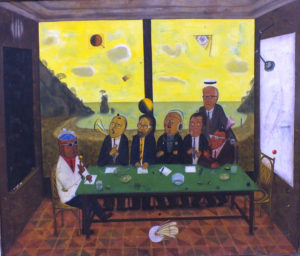
The beginnings of the cult "Herzegovinian Winter Salon" are connected to the local cultural environment, but it, as expected, outgrows the Herzegovinian and even Montenegrin context and gathers artists and selectors from the region, that is, the former Yugoslav republics. Precisely the fact that following the half-century existence of the "Herzegovina Winter Art Salon", one can continuously follow/read a cross-section of the artistic life of the local areas, is reason enough for respect and encouragement for its strengthening and improvement, explains Dr. Anastazija Miranovic - art historian and art critic.
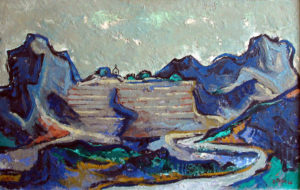
"Herzegovina winter art salon has always been realized, supported and opened by the most outstanding artists, experts, intellectuals of their time, from the present and the former Yugoslav space, starting from the first Salon, back in 1968, which was opened by the then president of the Association of Fine Artists of the Republic of Montenegro, the artist Aleksandar Aco Prijic, through the constellation of prominent ones who followed - artists who exhibited at Salonu, art historians - selectors/jury members, writers (Mihailo Lalic, Blaze Koneski, Zuko Dzmuhur,...) and social workers"...