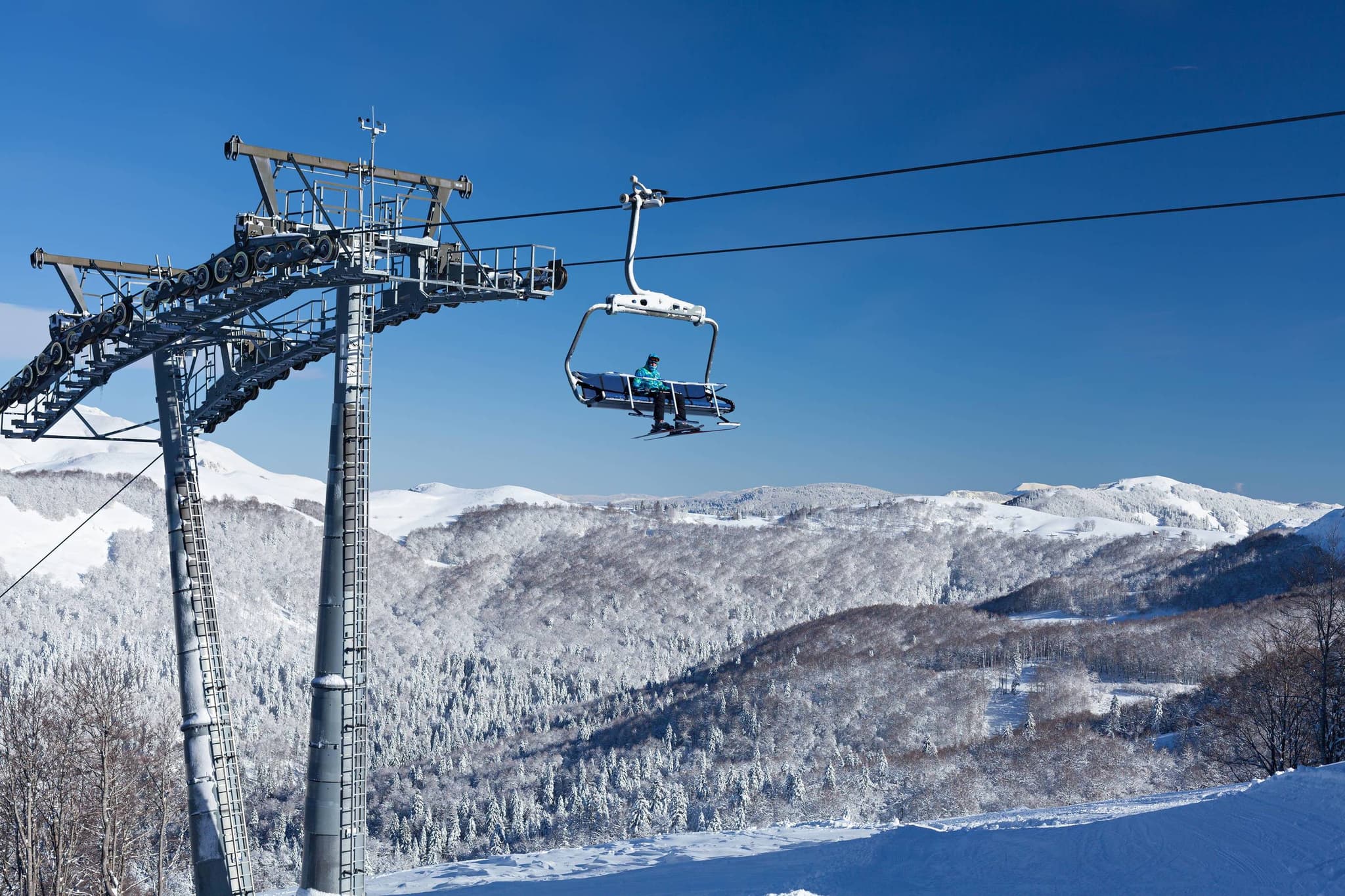
 Kolašin, as the most developed ski center in Montenegro, although it is structurally a small mountain town, has everything a mountain refuge should have for enjoyment. From the reconstructed ski lift, and the new six-seater cable car "Vilina Voda", extended and new ski slopes for 5,500 skiers per hour, to the healing air due to the altitude ranging from 1,450 to 1,973 meters, and the distance of only a few kilometers from one of the largest rainforests of the Biogradksa Gora National Park. Because of the slopes of the Bjelasica mountain, the Biogradska Gora park, the exciting rapids of the Tara and Morača rivers, the multitude of crystalline mountain lakes and forests, this area represents an exceptional destination for rest and recreation. Visitors enjoy these natural pearls whether they are skiing, sledding, hiking, rafting or just enjoying mulled wine and a view of the mountains.
 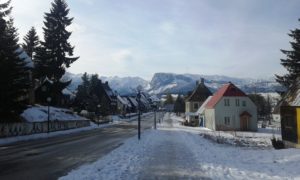 About two and a half hours drive from the coast, you can visit a rustic town whose original name was "Varezina voda". It is believed that the name came from strong sources of drinking water, around which a settlement with typical mountain architecture was formed. The name Žabljak was officially given in 1870. Church of St. The Transfiguration is the only old building that has stood the test of time and was built in honor of the victory over the Turks in 1862. The contribution of the National Liberation Partisan Detachment from Durmitor in the fight against fascist activities in the Balkans is also known in history, with 15 prominent national heroes.
 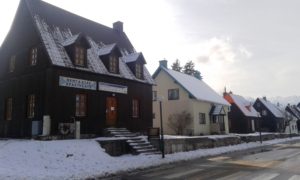 Žabljak is now a recognizable tourist town, which is interesting 365 days a year for lovers of outdoor activities due to the suitable parish, sub-mountain and typical alpine climate. Due to the extremely low average temperature of 2 to 8 degrees Celsius, the area of Durmitor is under snow for 120 days. The ski fields, which are at the highest altitude, are covered with snow up to 150 days a year. An interesting fact is that even during the summer on the highest parts of Durmitor, snow drifts can be observed. In the area of Kalica, the so-called The "THICK FLOOR", which is 200 to 300 meters long, can be skied in the middle of summer. Durmitor National Park, which is under the protection of UNESCO, is located just 10 minutes' walk from the city center. We recommend hiking around the Black Lake, which is part of the National Park, and the image of the frozen lake will enchant you. The hiking trail around the lake and through the forest is 4 km long. but full of exciting visual and sensory experiences. A walk through the National Park also has an educational character, because the plant and animal species represented in this area are presented on the boards placed throughout the park.
 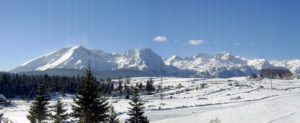 On the pearl of the Boko Kotor hinterland, as we call Orjen, snow remains until the end of May thanks to the highest amount of precipitation in winter in Europe, which causes a thick snow cover in the higher parts of the massif.So the Orjenski Massif is also an ideal destination for active vacations - mountain walks, alpinism and for scientific observations. The first routed mountain path was acquired at the end of the 19th century, during the reign of the Austro-Hungarian Monarchy, and the Austro-Hungarian heir to the throne, Prince Rudolph, personally climbed the main peak during his tour of this part of the Empire. Austria-Hungary is also associated with the construction of a series of fortifications and excellent cart roads, a masterpiece of the construction industry of the time. The fact that they are still in use, without any maintenance or changes, speaks volumes about the quality of the roads. When visiting Orjen, you should definitely visit Crkvice, the place where there was a large Austro-Hungarian barracks with accompanying fortifications on prominent hills in the area. The native traditional architecture is, of course, far more modest and rustic, and its preserved originality and simplicity is a valid reason for visiting the villages of Kruševica, Mokrina, Kamenog, Žlijeb, Bunovića Ubal in the sub-region. The main building material is stone and it is often used even for roofing. a place in the world filled with speleological objects, pits and caves and is a real paradise for speleologists, who estimate that they still have decades and decades of research work in the Massif. Orjen is also a favorite hiking destination, largely because of the Zubac cable, which is also the highest point on the eastern Adriatic coast.
 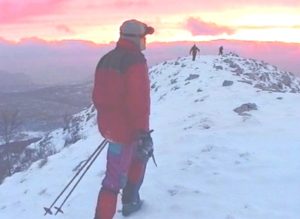 Another destination that mountaineers like to visit is Subra, a mountain that is associated with several epithets: its peak is the best viewpoint in the Massif, Subra's amphitheater is famous for the most interesting detail of the coastal Dinarides, and Subra's plateaus are one of the most impressive examples of karst micro-relief in the world. The Subra amphitheater is the most colorful alpinist terrain on Orjen, a real treat for fans of this extreme sport. The southern ends of the massif, in the immediate hinterland of Bokele, are increasingly used for paragliding. Excursionists and mountaineers are happy to visit Vrbanj, which in the past decades has received the contents of a local excursion center. Kamenska plain with mountain lodge Za Vratlo is an essential destination of the southern part of the massif. Apart from Subra, there are several mountain peaks with an excellent view of the Gulf and the open sea. The most common starting point for Subra is from the mountain lodge Za Vratlom (1160 m). The home is a harmonious stone building with a capacity of 50 beds. Since the building is not on the road, it has preserved peace and a real mountain atmosphere. Already at home, attention is drawn to the dominant bare domed peak of Subra, which can be seen in the west.