Podgorica
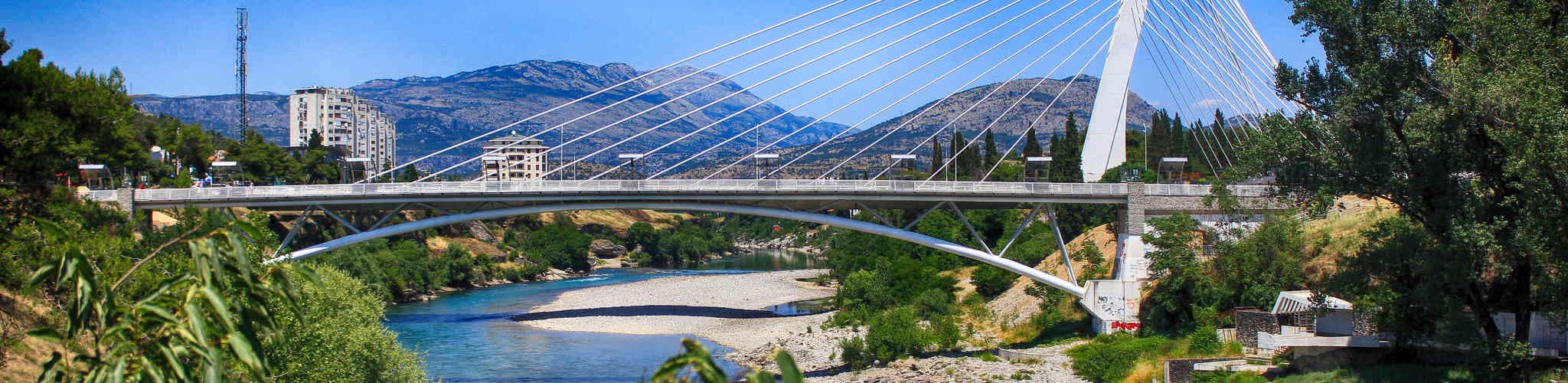
Podgorica is the capital and largest city of Montenegro, a modern urban center that serves as the country's political, economic, and cultural hub. While often bypassed by tourists heading straight to the coast, Podgorica rewards those who spend time here with a growing culinary scene, lively cafe culture, and superb access to some of Montenegro's most spectacular natural attractions. The city sits at the confluence of the Ribnica and Morača rivers, and its landscape is defined by these waterways. The graceful Millennium Bridge, with its striking cable-stayed design, has become the city's modern architectural icon and is beautifully illuminated at night. Along the riverbanks, locals gather at open-air restaurants and bars, while the remnants of the old Turkish quarter — including the Stara Varoš neighborhood and the Clock Tower — offer glimpses of the city's Ottoman past amid the predominantly modern streetscape rebuilt after heavy World War II bombing. Podgorica's greatest asset may be its location. Lake Skadar, the largest lake in southern Europe and a protected national park teeming with birdlife, is just 20 minutes south. The dramatic Morača Canyon, with its sheer walls and ancient monastery, lies less than an hour to the north. And the renowned Plantaže wine estate — the largest vineyard in southern Europe — sprawls across the Ćemovsko Polje plain just outside the city, offering tours and tastings of Montenegro's celebrated Vranac red wines. Podgorica Airport (TGD) provides direct flights to numerous European cities, making the capital the most common point of entry for visitors to Montenegro. From here, the coast is about an hour away, the mountains of the north around 90 minutes, and virtually every corner of this compact country within a comfortable day trip. With an increasingly sophisticated dining and nightlife scene and hotels to suit every budget, Podgorica makes an excellent and often overlooked base for exploring all of Montenegro.