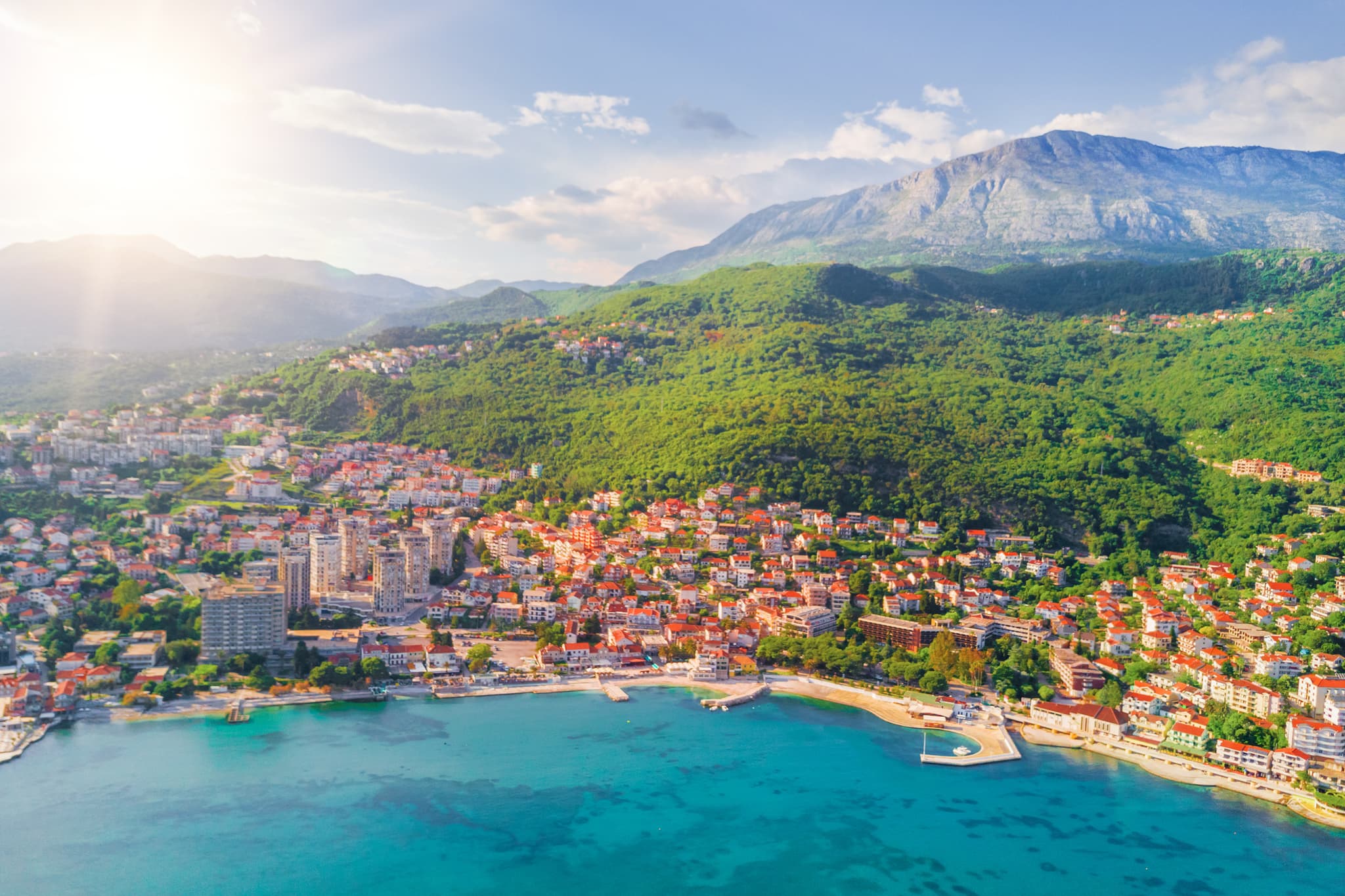
Montenegro may be one of Europe's smallest countries, but its culinary identity punches far above its weight. Squeezed between the Adriatic Sea and the Dinaric Alps, this nation of just over 600,000 people draws from two radically different pantries: the salt-sprayed bounty of its 293-kilometer coastline and the hearty, smoke-scented larders of its mountain villages. A single day's drive -- barely two hours from Budva to Zabljak -- can take you from a plate of mussels simmered in white wine to a steaming bowl of cornmeal porridge enriched with mountain cheese. This duality is not a gimmick for tourists. It is the honest result of geography, climate, and centuries of tradition shaped by Venetian merchants, Ottoman administrators, and stubborn Montenegrin highlanders who never let anyone tell them how to eat. If you arrive in Montenegro expecting generic Balkan grilled meat and nothing more, you are in for a revelation. The food here tells the story of the country itself -- rugged, generous, and unapologetically real.
Two Kitchens, One Country: Understanding Montenegro's Regional Cuisine
The Coastal Kitchen
The Adriatic coastline from Herceg Novi to Ulcinj operates on a culinary grammar that will feel familiar to anyone who has eaten along the Dalmatian or Italian coasts, yet it carries distinctly Montenegrin accents. Olive oil, garlic, parsley, and wine form the base. Fish and shellfish dominate, prepared simply to let the ingredients speak. The Bay of Kotor, a fjord-like inlet sheltered from open-sea currents, produces particularly prized mussels and oysters. Coastal restaurants -- many of them family-run konobas with stone walls and wooden beams -- price fish by the kilogram rather than the portion, a system that can surprise first-time visitors but ensures freshness and transparency.
The Italian influence is unmistakable. Pasta dishes, risottos, and bruschetta appear on nearly every menu from Tivat to Petrovac. But the Montenegrin versions tend toward bolder flavors and larger portions than their Italian cousins. A black risotto here comes inky-dark and intensely briny, while a seafood buzara arrives in a sauce thick enough to demand bread for soaking.
The Mountain Kitchen
Travel inland and upward, and the cuisine shifts dramatically. Above 800 meters, the Adriatic may as well be on another continent. Here the diet is built on what survives long winters: cured meats, aged cheeses, dried beans, cornmeal, potatoes, and cabbage. Lamb and veal replace fish. Cream and kajmak (a thick, clotted dairy product) replace olive oil. The cooking is slow, heavy, and designed to fuel people who spend their days in physical labor at altitude.
The mountain kitchen is where Montenegro's most iconic dish -- Njeguski prsut -- originates. It is also where you will find kacamak, cicvara, and other dishes that rarely appear on coastal menus. This is comfort food in the truest sense: food that warms, sustains, and connects people to a way of life that has changed remarkably little in centuries.
Where the Two Kitchens Meet
The most interesting eating in Montenegro often happens in the overlap zone -- towns like Cetinje, the old royal capital perched between coast and mountain, or Rijeka Crnojevica, where Lake Skadar's freshwater fish meet mountain dairy traditions. Here you might find smoked carp served alongside kajmak, or lamb cooked with coastal herbs. These crossover dishes are rarely written about in guidebooks, but they represent Montenegrin cuisine at its most creative and authentic.
Must-Try Dishes: The Essential Montenegro Food List
Njeguski Prsut (Smoked Ham from Njeguski Village)
No discussion of Montenegrin food can begin anywhere else. Njeguski prsut is the country's single most celebrated food product, a dry-cured, cold-smoked ham produced in and around the village of Njeguski, which sits at approximately 900 meters altitude on the slopes of Mount Lovcen, directly above Kotor. The village's unique microclimate -- where cold mountain air meets warm Adriatic updrafts -- creates ideal conditions for curing meat.
The process takes one to two years. Pork legs are salted, pressed, then smoked over beechwood fires before being hung to air-dry in the mountain breeze. The result is a deep-red ham with a complex flavor profile: smoky, slightly sweet, with a firm but yielding texture that melts on the tongue. It is typically sliced paper-thin and served alongside Njeguski cheese (a semi-hard sheep's milk cheese from the same village) and olives, often as a starter or with drinks.
Expect to pay around EUR 3-5 for a generous starter plate of prsut and cheese at a mountain restaurant. At Njeguski village itself, you can buy whole legs or vacuum-sealed portions directly from producers, with prices ranging from EUR 25-40 per kilogram depending on age and quality [1].
Njeguski Steak
The most indulgent main course in the Montenegrin repertoire. A veal or pork steak is butterflied, stuffed with Njeguski prsut and Njeguski cheese, then breaded and pan-fried or grilled. When cut open, the melted cheese and smoky ham ooze out in a way that makes it clear why this dish has survived every culinary trend of the past century. It is rich, unapologetic, and best accompanied by a simple salad and a glass of Vranac wine. Prices range from EUR 10-16 at most restaurants.
Cevapi
The Balkans' most democratic street food. Cevapi are small, skinless sausages of minced beef and lamb (sometimes with veal), grilled over charcoal and served in a lepinja -- a soft, slightly charred flatbread -- with raw chopped onions and kajmak or ajvar (roasted red pepper relish). Every Balkan country claims their version is best; Montenegro's tend to be smaller and more finely textured than Bosnian cevapi, with a higher lamb content.
A portion of ten cevapi with bread and accompaniments costs EUR 4-7 at most restaurants and street-food spots. In Podgorica, cevapi is an institution -- locals debate fiercely over which cevabdzinica (cevapi restaurant) is superior. The best are always packed at lunch.
Kacamak
If one dish defines the Montenegrin mountain kitchen, it is kacamak. This is cornmeal porridge cooked slowly with potatoes, then enriched with young cheese and kajmak until it becomes a thick, stretchy, golden mass. It arrives at the table in a heavy pot, steaming and fragrant, and is eaten communally -- you tear off pieces of bread, scoop the kacamak, and let the cheese stretch in long, satisfying strands.
Kacamak is the quintessential cold-weather food, and it is at its best in the mountain towns of Kolasin and Zabljak between November and March. Expect to pay EUR 5-8 for a generous portion, enough for two people. It is traditionally served with cicvara (see below) as a pair, and accompanied by cured meat or soured milk.
Buzara (Mussels or Shrimp in Wine Sauce)
The Adriatic coast's signature shellfish preparation. Buzara refers both to the cooking method and the sauce: shellfish simmered in white wine, garlic, olive oil, parsley, and breadcrumbs until the liquid reduces into a rich, slightly thickened broth. Mussel buzara (buzara od dagnji) is more common and affordable (EUR 8-12); shrimp buzara (buzara od kozica) is the luxury version (EUR 15-25).
The dish arrives in the cooking pot, shells open and glistening, and the correct approach is to eat with your hands, using empty shells as tweezers to extract the meat, and mopping up the sauce with crusty bread. Buzara is available at virtually every coastal restaurant, but the best versions use mussels from the Bay of Kotor, where the sheltered waters produce exceptionally plump, sweet specimens [2].
Black Risotto (Crni Rizoto)
Cuttlefish ink risotto is a specialty found all along the eastern Adriatic, but Montenegrin versions tend toward the dramatic -- jet-black, intensely flavored, and served in portions that would alarm an Italian nonna. The cuttlefish ink gives the rice a striking color, a subtle brininess, and a silky texture. Pieces of cuttlefish (or sometimes squid) are cooked into the risotto, and a good version will have a slight resistance to the rice, creamy without being heavy.
Expect to pay EUR 10-15. Be warned: it will turn your teeth and lips temporarily black, which is considered part of the experience rather than a drawback. Order it at waterfront restaurants for the full effect.
Riba na Zaru (Grilled Fish)
The simplest and often the finest thing you can eat on the Montenegrin coast. Whole fish -- typically brancin (sea bass) or orada (sea bream), but also skarpina (scorpionfish) or even tuna steaks -- grilled over charcoal with nothing more than olive oil, garlic, and a squeeze of lemon. The fish is served whole, head and tail included, which allows you to verify its freshness by the clarity of the eyes.
Grilled fish is priced by the kilogram, typically EUR 30-50 per kilo depending on the species and location. A whole brancin or orada weighing 300-500 grams will cost EUR 12-20 per person. The waiter will usually offer to fillet it tableside. Pair with blitva (Swiss chard sauteed with potatoes and garlic in olive oil), the universal Adriatic side dish.
Sarma (Stuffed Cabbage Rolls)
A winter staple across the Balkans and a fixture of every Montenegrin family's cold-weather repertoire. Sour cabbage leaves are wrapped around a filling of minced meat (usually a mix of pork and beef), rice, onions, and spices, then slow-cooked for hours in a heavy pot with smoked meat for extra depth. The sourness of the fermented cabbage balances the richness of the meat filling, and the long cooking time creates a silky, almost jammy texture.
Sarma is rarely found in restaurants during summer, but from November to March it appears on menus across the country, coast and mountain alike. It is also the centerpiece of Christmas and slava (patron saint day) celebrations. A portion costs EUR 6-10.
Burek
The Balkans' answer to the question "what can you eat at 6 AM that costs almost nothing and fills you up for five hours?" Burek is spiraled phyllo pastry filled with sireva (cheese), meso (ground meat), or zeljanica (spinach), baked until golden and flaky. It is sold at pekara (bakeries) throughout Montenegro, available from early morning until sold out -- which is often by noon for the best versions.
A large slice or portion costs EUR 1-2, making burek the best-value meal in the country. Eat it with plain yogurt (jogurt), the traditional accompaniment that cuts through the richness. Podgorica and Niksic have the most devoted burek cultures, but you will find excellent versions in every town.
Priganice (Fried Dough Balls)
Montenegro's breakfast tradition at its most charming. Priganice are small balls of yeasted dough, deep-fried until puffed and golden, then served dusted with powdered sugar or drizzled with honey, often alongside fig jam. They are light, slightly crispy outside, pillowy inside, and dangerously easy to eat by the dozen.
Priganice appear on breakfast menus at hotels and guesthouses throughout the country, but they are also sold at bakeries and from street vendors during festivals. A plate of six to eight costs EUR 2-4. They are best eaten immediately, while still warm.
Cicvara
Kacamak's richer, more decadent cousin. Cicvara is made from cornmeal cooked with fresh cheese, kajmak, and butter until it reaches a creamy, almost fondue-like consistency. It is yellower and smoother than kacamak, with a more pronounced dairy flavor. In mountain restaurants, cicvara is often served alongside kacamak as a pair -- the two dishes are considered complementary, with kacamak providing texture and cicvara providing richness.
Rastan (Collard Greens Stew)
The everyday home cooking dish that rarely makes it into guidebooks but appears on Montenegrin tables several times a week. Rastan -- collard greens or kale -- is slowly stewed with potatoes, olive oil, and garlic until tender. Sometimes smoked meat is added for depth. It is simple, deeply flavored, and nutritious -- the kind of dish that grandmothers make without a recipe because they have been making it for sixty years.
Rastan is more common in home kitchens than restaurants, but you will find it at traditional konobas, especially in the Lake Skadar region and along the southern coast. When you see it on a menu, order it -- it means the kitchen is cooking real Montenegrin food.
Brav u Mlijeku (Lamb Slow-Cooked in Milk)
The showpiece of Montenegrin celebratory cooking. A whole lamb or large cuts of lamb are placed in a heavy pot with milk, covered, and slow-cooked for hours -- often in a sac (a domed metal lid covered with hot coals) for even, gentle heat. The milk gradually reduces and caramelizes, creating a rich, slightly sweet sauce while the lamb becomes impossibly tender.
Brav u mlijeku is reserved for special occasions: weddings, saint's day celebrations, and family gatherings. It is not commonly found in restaurants, but some mountain establishments in Kolasin, Zabljak, and Cetinje offer it with advance notice. If you have the chance to try it at a family celebration or a restaurant that prepares it traditionally, do not hesitate.
Drinks: Wine, Rakija, Beer, and the Coffee Ritual
Vranac Wine and the Plantaze Winery
Montenegro's wine reputation rests primarily on one grape: Vranac (pronounced VRAH-nats), a robust, dark-skinned red variety that thrives in the Crmnica region around Lake Skadar. Vranac produces full-bodied wines with deep ruby color, notes of blackberry and plum, moderate tannins, and a distinctive mineral quality attributed to the limestone soils of its growing region.
The dominant producer is Plantaze (plantaze.com), which operates the largest single vineyard in Europe -- over 2,300 hectares of continuous vines in the Cemovsko Polje plain near Podgorica. Their standard Vranac is available at virtually every restaurant in Montenegro for EUR 3-5 per glass and EUR 12-20 per bottle. Their premium offerings -- Vranac Pro Corde and Stari Podrum reserve -- are worth seeking out for EUR 25-40 per bottle and demonstrate what the grape can achieve with careful winemaking and aging [3].
Beyond Plantaze, a growing number of small producers are making excellent Vranac and other wines. Sipcanik, built in a converted railway tunnel and one of the country's most atmospheric wineries, offers tastings and tours for EUR 10-15.
Krstac White Wine
Montenegro's answer to the question of what to drink with seafood. Krstac (pronounced KR-statch) is a white grape variety indigenous to the region, producing dry wines with citrus and herb notes, moderate acidity, and a slightly mineral finish. It is less well-known internationally than Vranac but perfectly suited to the coastal cuisine. A glass costs EUR 3-4, and a bottle EUR 10-18.
Rakija: The Spirit of the Balkans
No meal in Montenegro is truly complete without rakija, the fruit brandy that serves as aperitif, digestif, welcome drink, celebration marker, and -- some locals insist -- medicine. Rakija is distilled from fermented fruit, and the variety depends on the fruit used:
- Sljivovica (plum): The most traditional variety, smooth and slightly sweet
- Lozovaca (grape): Drier and more refined, similar to Italian grappa
- Kruska (pear): Aromatic and delicate, often considered the finest variety
- Medovaca (honey): Sweetened with honey, smoother and more approachable for newcomers
Homemade rakija is ubiquitous -- many families distill their own, and it is offered to guests as a matter of hospitality. Commercial versions are available at shops and restaurants for EUR 1-3 per glass. The standard strength is 40-45% alcohol, though homemade versions can reach 50-60%.
Niksicko Beer
Montenegro's national beer, brewed in Niksic since 1896 by the Trebjesa brewery. Niksicko (pronounced NICK-shitch-ko) is a straightforward European lager -- crisp, clean, and refreshing -- that pairs well with grilled meat and warm afternoons. It is available everywhere for EUR 2-3 at restaurants and under EUR 1 per can at shops. A half-liter draft at a waterfront bar costs EUR 2.50-3.50. It will not change your life, but it will cool you down reliably after a day of sightseeing [4].
The Montenegrin Coffee Ritual
Coffee in Montenegro is not a grab-and-go commodity. It is a ritual, a social event, and a daily anchor. Montenegrin coffee (domaca kafa, literally "house coffee") is prepared in a dzezva -- a small, long-handled copper pot -- by bringing very finely ground coffee and water to a boil, then allowing it to settle before pouring. The result is thick, strong, and served in small cups alongside a glass of cold water and often a piece of lokum (Turkish delight).
A coffee at a cafe costs EUR 1-2. The social expectation is that you will sit, sip slowly, talk, and remain for at least 20-30 minutes. Ordering a coffee to go, while increasingly possible in larger towns, is considered mildly eccentric. The phrase "let's get a coffee" (hajde na kafu) is the Montenegrin equivalent of "let's catch up" -- it is an invitation to conversation, not caffeine.
The Konoba Tradition
The word konoba (plural: konobe) refers to a specific type of traditional restaurant that is central to Montenegrin dining culture. Originally, konoba meant a cellar or storage room -- a cool, stone-walled space where families kept wine, olive oil, cured meats, and cheese. Over time, these spaces evolved into informal eateries where families served their own products to neighbors and travelers.
Today, the term covers a range of establishments, from genuinely rustic family operations where the menu depends on what was caught or harvested that day, to more polished restaurants that evoke the konoba aesthetic with stone walls and wooden furniture. The best konobas share several characteristics: a short menu, local sourcing, home-style cooking, generous portions, and a relaxed pace. You are not expected to hurry. The waiter will not bring the check until you ask for it.
Coastal konobas tend to specialize in seafood, while mountain konobas focus on grilled meat and dairy dishes. Some of the finest meals in Montenegro happen in konobas that do not appear on Google Maps -- ask your host or hotel staff for recommendations, and you will often be directed to someone's cousin's place up a side road where the grilled octopus is life-changing and costs EUR 10.
Seafood by the Kilo: How Coastal Fish Pricing Works
First-time visitors to Montenegro's coast are sometimes confused -- or alarmed -- by fish pricing. Most restaurants list grilled fish not by the portion but by the kilogram. A menu might read "Brancin - EUR 40/kg" or "Orada - EUR 35/kg." This is standard practice throughout the eastern Adriatic and is actually more transparent than fixed-portion pricing.
Here is how it works: you choose the type of fish you want, the waiter takes you to the display (usually a glass-fronted refrigerator near the kitchen) where you select your actual fish, it is weighed, and you are told the price before it is cooked. A typical whole sea bass or sea bream for one person weighs 300-500 grams, so a fish listed at EUR 40/kg will cost EUR 12-20 per person.
More expensive species include:
- Zubatac (dentex): EUR 45-60/kg, firm white flesh, considered the finest
- Skarpina (scorpionfish): EUR 40-50/kg, often used in brodetto (fish stew)
- Tuna steaks: EUR 35-45/kg
- Octopus: EUR 25-35/kg, usually grilled or prepared under a peka (bell-shaped lid)
The most affordable seafood options are mussels (EUR 8-12 per portion), sardines (EUR 6-10), and mixed fried fish plates (EUR 8-14).
Tipping and Dining Etiquette
Tipping in Montenegro is appreciated but not as rigidly expected as in the United States. The standard practice is to round up the bill -- if your meal is EUR 27, you leave EUR 30. For excellent service at sit-down restaurants, 10% is generous and well-received. At casual cafes and bakeries, rounding up or leaving small change is sufficient.
Other dining norms worth knowing:
- Bread charge: Most restaurants add a small charge (EUR 0.50-1.00) for bread and table settings (couvert). This is standard, not a scam.
- Meal timing: Lunch is the main meal, typically 1-3 PM. Dinner service starts around 7 PM and can run until 11 PM or later in summer.
- Pace: Montenegrin dining is slow by design. Allow 90 minutes for a proper lunch or dinner.
- Water: Tap water is safe and excellent throughout Montenegro (mountain-fed aquifers). Asking for tap water (voda iz cesme) at restaurants is acceptable, though some establishments prefer you order bottled.
Best Restaurants by City
Kotor
- Galion: Waterfront fine dining at the edge of the Old Town, specializing in seafood. The fish buzara and grilled catch are superb. Mains EUR 15-30. Reservation essential in summer.
- Scala Santa: Set against the fortress walls with views over the bay, Scala Santa offers refined Montenegrin cuisine in one of Kotor's most atmospheric settings. Try the Njeguski steak. Mains EUR 12-25.
- Bokun: A smaller, family-run restaurant known for generous portions and honest prices. Less tourist-polished than Galion, more authentically local. Mains EUR 8-18.
Budva
- Jadran: Located on Budva's Old Town walls, directly above the sea. The setting alone justifies a visit, but the seafood holds its own. Grilled fish and black risotto are highlights. Mains EUR 12-25.
- Porto: Modern Mediterranean cuisine in a stylish setting. Better wine list than most Budva restaurants. Mains EUR 14-28.
Herceg Novi
- Konoba Feral: A genuine konoba experience -- small, rustic, family-run, and serving some of the best seafood in the Bay of Kotor. The octopus salad and grilled fish are outstanding. Mains EUR 10-20.
- Catovica Mlini: Located in the village of Morinj, 15 minutes from Herceg Novi, this restaurant is set in a centuries-old stone mill beside a mountain stream. The setting is extraordinary -- dining among ancient stone arches and flowing water. Seafood dominates. Mains EUR 15-30. Worth the trip alone [5].
Tivat
- One: Contemporary Mediterranean dining in the Porto Montenegro marina district. Polished service, excellent wine list, harbor views. Mains EUR 15-30.
- Prova: More casual than One, with a focus on pizza and pasta alongside seafood. Good value. Mains EUR 8-18.
Cetinje
- Kole: The best restaurant in the old royal capital, serving traditional Montenegrin food in a convivial setting. Try the kacamak, Njeguski steak, and lamb dishes. Mains EUR 8-15. Excellent value compared to coastal prices.
Food Markets and Local Shopping
Every significant town in Montenegro has a market (pijaca or trznica) where local producers sell fresh fruits, vegetables, cheese, honey, and other products. The best for visitors are:
- Podgorica Green Market: The largest in the country, sprawling and chaotic, with everything from fresh produce to household goods. Saturday mornings are peak activity.
- Kotor Market: Small but well-stocked, located just outside the Old Town walls near the river. Fresh fish, local cheese, olives, and seasonal produce.
- Cetinje Market: Mountain produce -- cheese, prsut, honey, and seasonal mushrooms. Small but authentic.
- Herceg Novi Market: Good seafood and produce selection with views over the bay.
For packaged food souvenirs, look for: Njeguski prsut (vacuum-sealed portions travel well), local honey (especially chestnut honey from the north), olive oil from Bar or Ulcinj, dried figs, and Plantaze wine.
Vegetarian and Vegan Options
Montenegro is not historically a vegetarian-friendly destination -- meat and dairy are central to the national cuisine -- but options have improved significantly in recent years, particularly in tourist areas and larger towns.
Reliably vegetarian dishes include: zeljanica burek (spinach pastry), sopska salata (tomato, cucumber, onion, and grated cheese salad), grilled vegetables, pasta dishes, cheese-based kacamak, priganice, and various bean soups. The coastal cuisine offers more variety, with vegetable risottos, pasta, and salad-based meals widely available.
Fully vegan dining remains challenging, especially in mountain areas where dairy is in nearly everything. Podgorica has a few dedicated vegetarian/vegan restaurants, and international restaurants in Budva and Kotor increasingly offer plant-based options. Communicating dietary needs in smaller towns may require some patience and creativity, but Montenegrin hospitality generally means kitchens will try to accommodate.
Cooking Classes and Food Experiences
A growing number of operators offer food-focused experiences for visitors:
- Home cooking experiences: Several families in the Kotor and Lake Skadar areas offer half-day cooking classes (EUR 40-70 per person) where you shop at the market, prepare traditional dishes, and eat together. These are typically booked through Airbnb Experiences or local tourism offices.
- Wine tasting at Plantaze or Sipcanik: EUR 10-20 per person for guided tastings, often including cheese and prsut.
- Njeguski village food tours: Half-day tours from Kotor (EUR 30-50) that visit prsut and cheese producers in Njeguski village with tastings.
- Olive oil tasting: In the Bar and Ulcinj areas, some producers offer tastings of local olive oil during harvest season (November-December).
- Truffle hunting: A niche but growing activity around Lake Skadar, where black truffles grow wild.
Where to Stay for Food Lovers
Your choice of base significantly affects your culinary experience in Montenegro. Here are the best options:
Kotor is the strongest all-around base for food lovers. Its Old Town has excellent restaurants, a daily market, and easy access to both coastal seafood and mountain cuisine (Njeguski village is a 30-minute drive). Accommodation ranges from guesthouse rooms (EUR 40-60/night) to boutique hotels in restored stone buildings (EUR 100-200/night).
Herceg Novi offers a quieter, more local dining scene with exceptional seafood, and proximity to Catovica Mlini in Morinj. Accommodation is generally 20-30% cheaper than Kotor or Budva.
Kolasin is the best mountain base for experiencing highland cuisine -- kacamak, cicvara, lamb, and fresh dairy. Winter is the prime season. Hotels and guesthouses cost EUR 30-60/night.
Podgorica has the most diverse restaurant scene, including international options and the best cevapi in the country. It is not a tourist town, which keeps prices low and quality high.
Browse our full selection of Montenegro accommodations at montenegro.com/properties, where you can filter by location and find places that put you within walking distance of the country's best food.
Frequently Asked Questions
Is Montenegrin food spicy?
No. Montenegrin cuisine uses garlic, pepper, paprika, and herbs for flavor, but it is not hot or spicy in the chili-pepper sense. The boldest flavors come from smoke (in cured meats), salt (in coastal dishes), and dairy richness (in mountain dishes). If you want heat, ajvar -- the roasted red pepper condiment -- has a mildly spicy version, and some restaurants offer chili flakes on request.
How much should I budget for food per day in Montenegro?
For comfortable eating at sit-down restaurants, budget EUR 30-50 per person per day. This covers a bakery breakfast (EUR 2-3), a casual lunch (EUR 8-12), and a proper dinner with wine (EUR 15-25). You can eat well for less by relying on bakeries, markets, and street food (EUR 15-20/day), or spend more at fine-dining establishments (EUR 60-80/day).
Is tap water safe to drink in Montenegro?
Yes. Montenegro's tap water comes from mountain aquifers and is generally excellent. It is safe to drink throughout the country, and many locals consider it superior to bottled water. Some coastal areas during peak summer may experience slight chlorination, but the water remains safe.
Do restaurants in Montenegro accept credit cards?
Most restaurants in tourist areas and larger towns accept Visa and Mastercard. However, smaller konobas, bakeries, market stalls, and rural establishments may be cash-only. Always carry some euros in cash. ATMs are widely available in all towns.
What time do Montenegrins eat dinner?
Dinner service typically begins at 7 PM and continues until 10-11 PM, or later in summer coastal towns. The peak dining hour is 8-9 PM. Eating dinner before 7 PM is possible at tourist-oriented restaurants but uncommon for locals. Lunch (1-3 PM) is traditionally the largest meal of the day, though this pattern is shifting in urban areas.
Are there any Montenegrin food festivals worth visiting?
Yes, several. The Petrovac Wine and Bluefish Festival (July) celebrates sardines and local wine. The Njeguski Prsut Fair (late September or October) in Njeguski village showcases the country's best cured ham. The Herceg Novi Wine Festival (February) combines wine with the Mimosa Festival celebrations. Lake Skadar hosts occasional carp festivals in winter. Check local tourism office websites for exact dates, which vary annually.
References
[1] Njeguski prsut production and traditions. Montenegro National Tourism Organisation. montenegro.travel/en/gastronomy. Accessed 2025.
[2] Bay of Kotor mussel farming and local seafood. Lonely Planet Montenegro, 5th Edition. Dragicevic, P. & Mutic, A. Lonely Planet Publications, 2022.
[3] Plantaze Winery: History, vineyards, and Vranac wines. plantaze.com/en/about-us. Accessed 2025.
[4] Trebjesa Brewery and Niksicko beer heritage. trebjesa.co.me. Accessed 2025.
[5] Catovica Mlini restaurant and cultural heritage. Konoba Catovica Mlini. catovicamlini.me. Accessed 2025.
[6] Montenegrin Culinary Federation. culinary.me. Traditional recipes and culinary heritage documentation. Accessed 2025.
[7] Montenegro gastronomy overview and regional cuisine guide. Lonely Planet. lonelyplanet.com/montenegro/food-and-drink. Accessed 2025.